
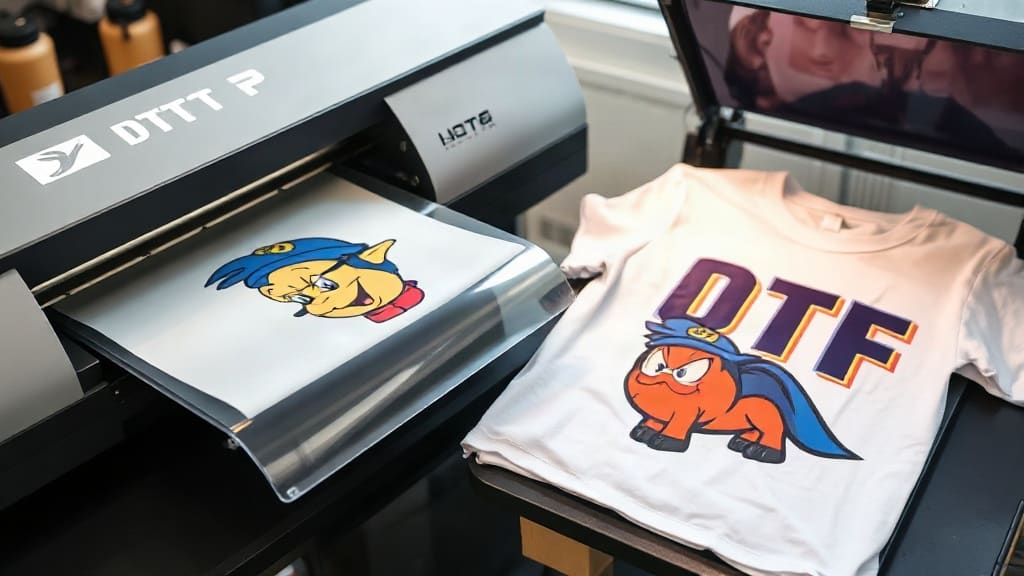
DTF printing has taken the custom apparel world by storm, offering a simple way to create vibrant, durable transfers without the complexity of traditional screen printing. I remember the first time I tried it in my garage studio: within minutes, I had a soft, stretchy print on a dark polyester shirt that looked professionally made. Since then, DTF has become my go-to method for small batches and one-off designs. In this guide, I will walk you through everything you need to know about DTF printing, from how it works to the costs involved, and share practical tips I have learned along the way.
What Is DTF Printing?
Direct-to-film (DTF) printing is a technique where a design is printed onto a special PET film using a modified inkjet printer with white ink and CMYK colors. The printed film is then coated with an adhesive powder, cured, and heat-pressed onto fabric. Unlike heat transfer vinyl (HTV) or sublimation, DTF works on a wide range of materials, including cotton, polyester, blends, and even leather.
The key advantage of DTF is its versatility. You can print full-color designs with intricate details, and the transfer has a soft hand feel. It also handles dark fabrics beautifully because of the white ink layer. For someone like me who runs a small online store, DTF eliminates the need for screen meshes and setup fees, making it perfect for custom orders.
How Does DTF Printing Work?
Understanding the process helps you troubleshoot and get the best results. Here is a step-by-step breakdown of how DTF printing works:
- Design Preparation: Create your artwork in a design software like Adobe Illustrator or Canva. Ensure that the image has a resolution of at least 300 DPI. If your design has white areas, you may need to add a white underbase, but many DTF printers handle this automatically.
- Printing: The design is printed onto a special PET film. The printer uses CMYK inks plus white ink. The white ink is typically printed first (underbase), then the CMYK colors on top. The order can vary depending on the printer and film.
- Applying Adhesive Powder: While the ink is still wet, you sprinkle a hot-melt adhesive powder over the printed film. The powder sticks only to the ink, not the film. Shake off the excess powder.
- Shaking and Curing: Place the film on a flat surface and shake it to remove excess powder. Then, cure the powder by passing it through a heat source (like an oven or a heat press) at around 160°C (320°F) for a few seconds. This melts the powder into the ink.
- Heat Press Transfer: Preheat your heat press to about 165°C (330°F). Place the film with the design facing down onto your garment. Press for 10-15 seconds with moderate pressure. Then, peel the film away, either hot or cold, depending on the film type.
I have found that using a heat press with even pressure is crucial. The first few times, I had peeling issues because I didn't press long enough. Now, I always do a test press on a scrap fabric to fine-tune the time and temperature.
Advantages of DTF Printing
DTF has become popular for good reasons. Here are the main benefits:
- Versatility: Works on many fabrics, including blends that are tricky for sublimation.
- Soft Hand Feel: The print is thin and flexible, almost like a direct-to-garment print.
- Durability: When done correctly, DTF prints can withstand many washes without cracking or fading.
- No Weeding: Unlike HTV, there is no tedious weeding of excess vinyl.
- Color Accuracy: You can achieve photorealistic prints with gradients and details.
- Small Runs: You can print one item or hundreds without extra setup.
For my business, the no-weeding feature alone saves me hours every week. I can fulfill orders for custom pet portraits and family photos quickly, which impresses my customers.
DTF vs. Other Printing Methods
To decide if DTF is right for you, compare it with other common methods:
DTF vs. Screen Printing
Screen printing is great for bulk orders with spot colors, but it requires screens and setup time. For small quantities, DTF is more cost-effective. Also, DTF offers easier full-color reproduction.
DTF vs. DTG (Direct-to-Garment)
DTG prints directly onto the garment and works best on 100% cotton. DTF can be used on a wider variety of fabrics and is often more affordable for dark shirts because it doesn't require a pre-treatment process. However, DTG has a softer feel on cotton.
DTF vs. Sublimation
Sublimation works only on polyester and leaves a permanent, vibrant print. DTF is more versatile and can be used on cotton, but sublimation prints are arguably more durable for activewear since they don't sit on the fabric surface.
In my experience, I use sublimation for polyester sports jerseys and DTF for everything else, like cotton tees and hoodies.
What Do You Need to Start DTF Printing?
If you are considering investing in DTF, here is a list of essential equipment and supplies:
- DTF Printer: You can convert a regular Epson or Brother printer with a DTF conversion kit, or buy a dedicated DTF printer. Prices range from $500 for a converted desktop printer to $10,000+ for industrial models.
- PET Film: You need specific film that can hold the ink and withstand heat. Look for rolls that are compatible with your printer.
- Adhesive Powder: Hot-melt powder that activates under heat. Choose a fine or ultra-fine powder for detailed prints.
- Heat Press: A clamshell or swing-away press with adjustable temperature and pressure.
- Curing Oven or Heat Gun: To melt the powder. Some use a heat press for curing, but a dedicated oven yields more consistent results.
- Software: RIP software (like Flexi or Wasatch) to manage color profiles and white ink.
Starting with a converted printer is a budget-friendly option, but be prepared to tweak settings. I started with a converted Epson ET-2800, and it worked well for small orders. As my business grew, I upgraded to a dedicated DTF printer for speed and reliability.
Costs of DTF Printing
Knowing the costs is crucial for pricing your products. Here is a breakdown:
Initial Setup Costs
A basic setup with a converted printer, heat press, and supplies can cost around $1,500 to $3,000. A mid-range dedicated DTF setup might cost $5,000 to $10,000, while industrial units go higher.
Cost Per Transfer
The cost per transfer depends on the design size and your ink and powder usage. On average, for an A4 (8.5"x11") sheet with a moderate design, the cost is about $1 to $2 in materials. This includes film, ink, and powder. When you add labor and overhead, your total cost might be $3 to $5 per sheet. You can fit multiple small designs on one sheet, reducing the cost per piece.
I usually price my custom tees at $25, which gives me a healthy margin after considering the shirt cost and transfer cost.
Troubleshooting Common DTF Issues
Even experienced printers face issues. Here are some common problems and solutions:
Poor Adhesion
If your print peels off after washing, the adhesive powder might not be applied evenly or cured at the right temperature. Ensure you shake off excess powder thoroughly and cure at the recommended temperature. Also, press with enough pressure and time.
Ghosting or Blurring
This happens when the film moves during pressing. Make sure the film is taped securely to the garment and that you use a Teflon sheet to protect the design. Also, avoid sliding the press.
White Ink Clogging
White ink is thicker and can clog printheads. Use a printer with a good white ink circulation system. Run a cleaning cycle regularly and keep the printer in a dust-free environment.
One time, I had a batch of shirts with cracking because I pressed them at too high a temperature. I lowered the temp and increased the time slightly, and the problem disappeared.
Tips for Perfect DTF Transfers
Here are some insider tips that I have gathered from trial and error:
- Use a High-Quality Film: Cheap film can warp or stick. Invest in reputable brands like DTF Superstore or Printshift.
- Calibrate Your Printer: Use a color management tool to ensure accurate colors. Test prints are essential.
- Pre-Press Your Garment: Press the shirt for 2-3 seconds to remove moisture and wrinkles before applying the transfer.
- Cool Peeling: For some films, cold peeling gives a matte finish, while hot peeling gives a glossy look. Choose based on your preference.
- Keep the Powder Fine: For detailed designs, use a fine powder to avoid a thick, rubbery feel.
Frequently Asked Questions
Can DTF prints withstand many washes?
Yes, when applied correctly, DTF prints can last for over 50 washes without significant fading or cracking. The key is to use the right curing time and temperature. I always wash-test my prints to ensure durability.
Can I use DTF on dark shirts?
Absolutely. DTF is excellent for dark fabrics because the white ink layer acts as an opaque base, making colors pop. That is one of its biggest advantages over sublimation.
Do I need a special printer for DTF?
You can convert a standard Epson or Brother printer using a DTF conversion kit, which includes special ink and a white ink system. However, dedicated DTF printers are more reliable and come with features like bulk ink systems and vibration to prevent clogging.
What is the difference between DTF and DTG?
DTG prints directly on the garment, while DTF prints on a film that is then transferred. DTG offers a softer feel on cotton but requires a pre-treatment for dark shirts and is slower for multiple colors. DTF is more versatile and faster for small batches.
Is DTF printing profitable for a small business?
Yes, DTF printing can be very profitable if you price your products correctly. With low setup costs and no minimum order quantities, you can offer custom products at a premium. Just ensure you account for all costs, including labor and equipment depreciation.
In conclusion, DTF printing is a game-changer for custom apparel. Whether you are a hobbyist or a growing business, it offers a perfect blend of quality, versatility, and affordability. I hope this guide helps you make an informed decision. Start small, experiment, and soon you will be producing stunning transfers that your customers will love.